Cement Fondu Project Space
in conjunction with the sixth annual exhibition of artists Rainbow Chan X Sin Wai Kin
10 August – 29 September 2024
Text by Donnalyn Xu
Photographs by Jessica Maurer and Four Minutes to Midnight/Maria Boyadgis
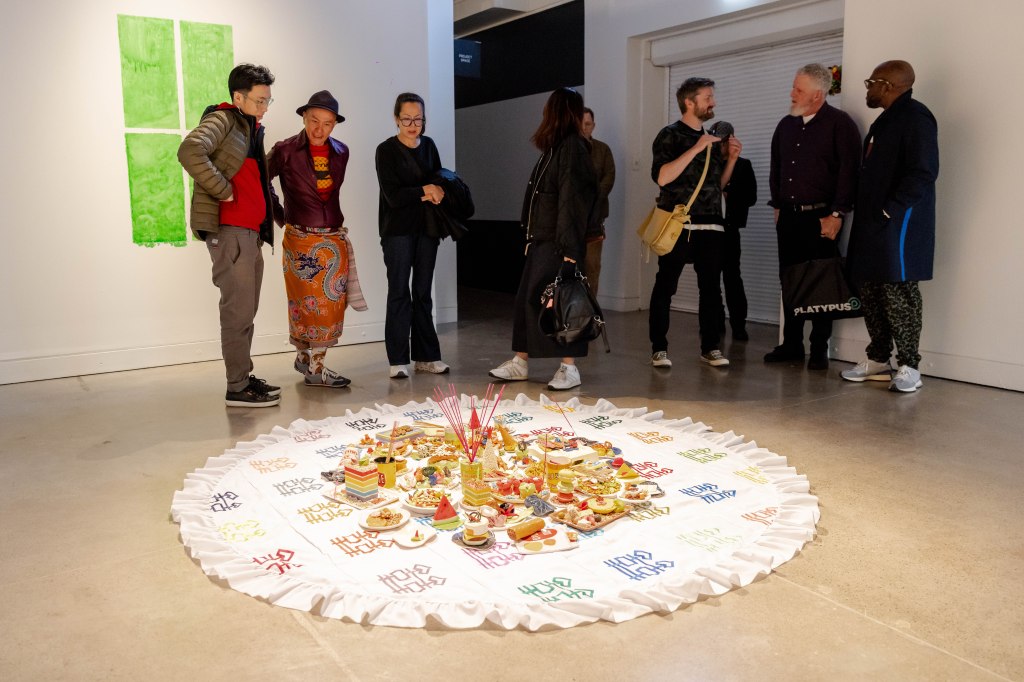
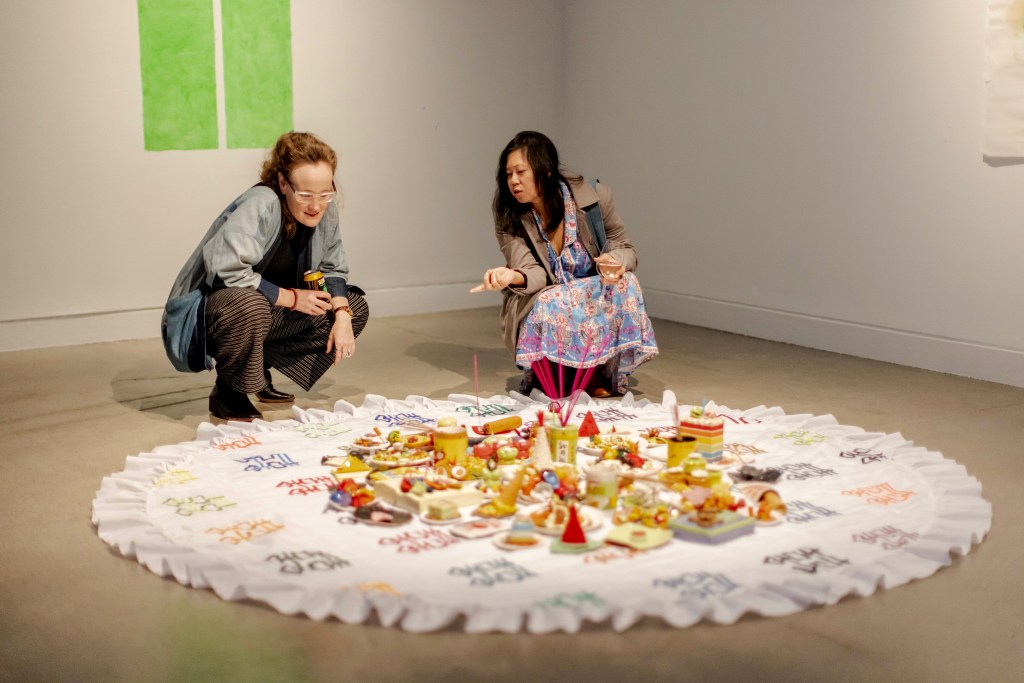

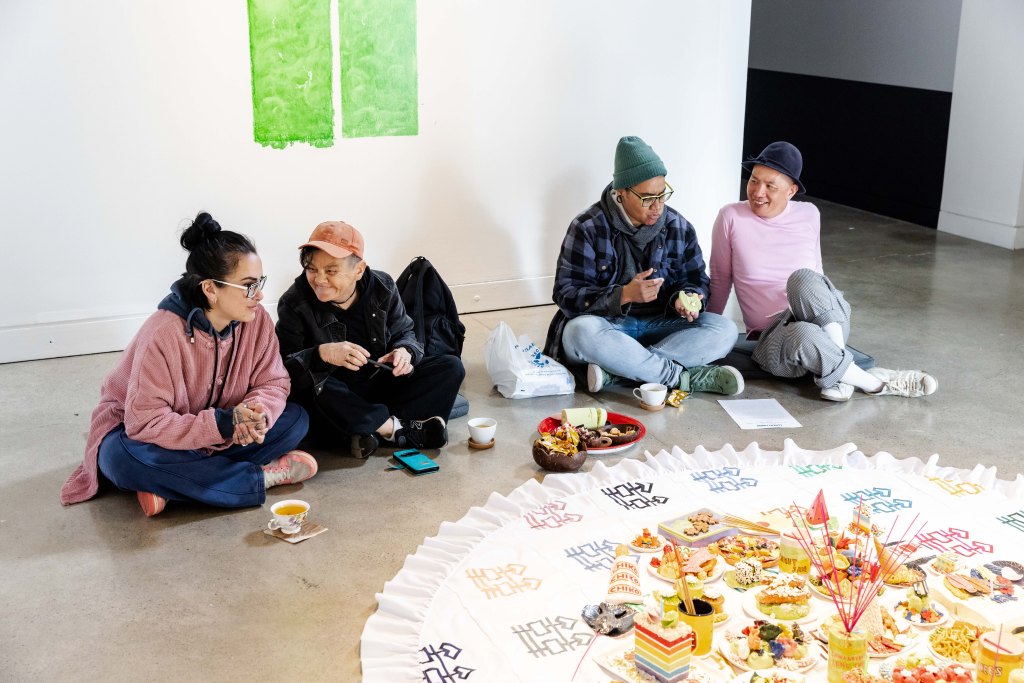
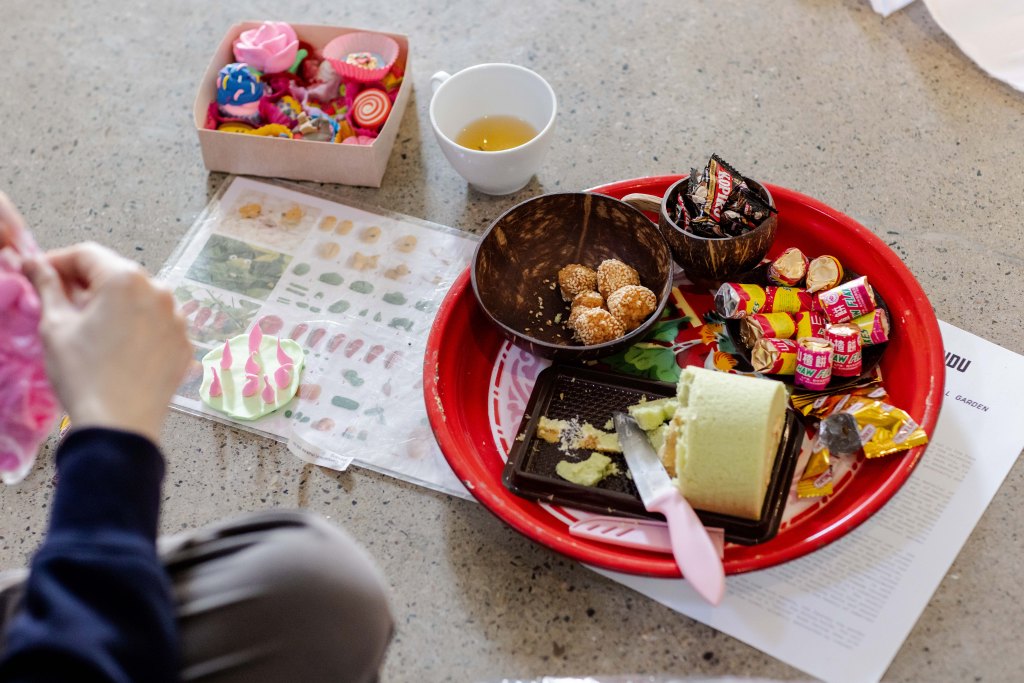
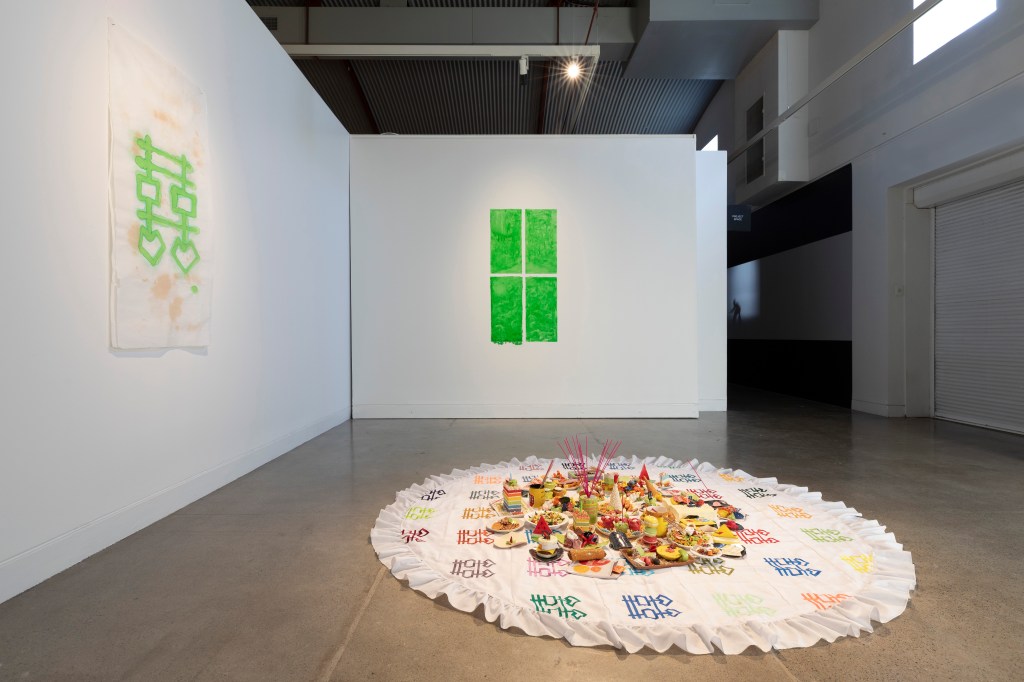
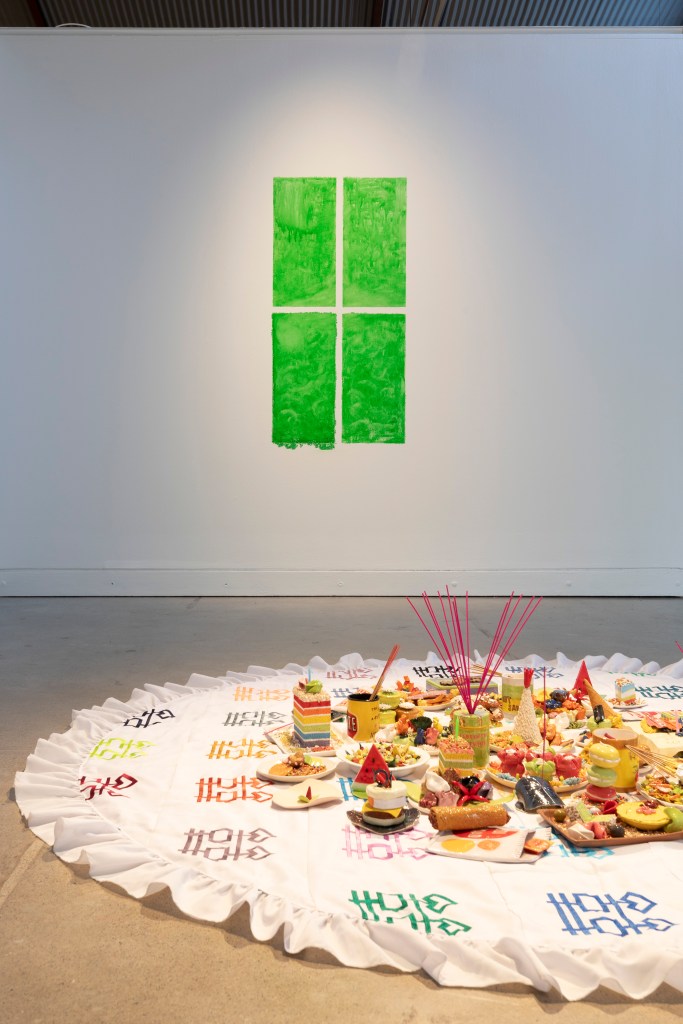
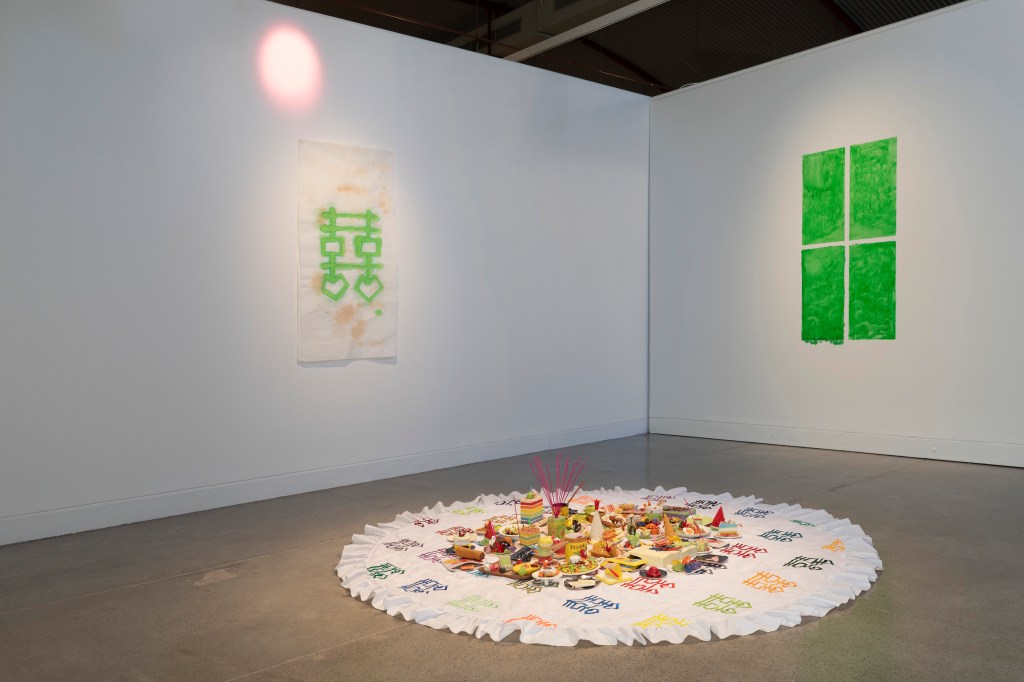
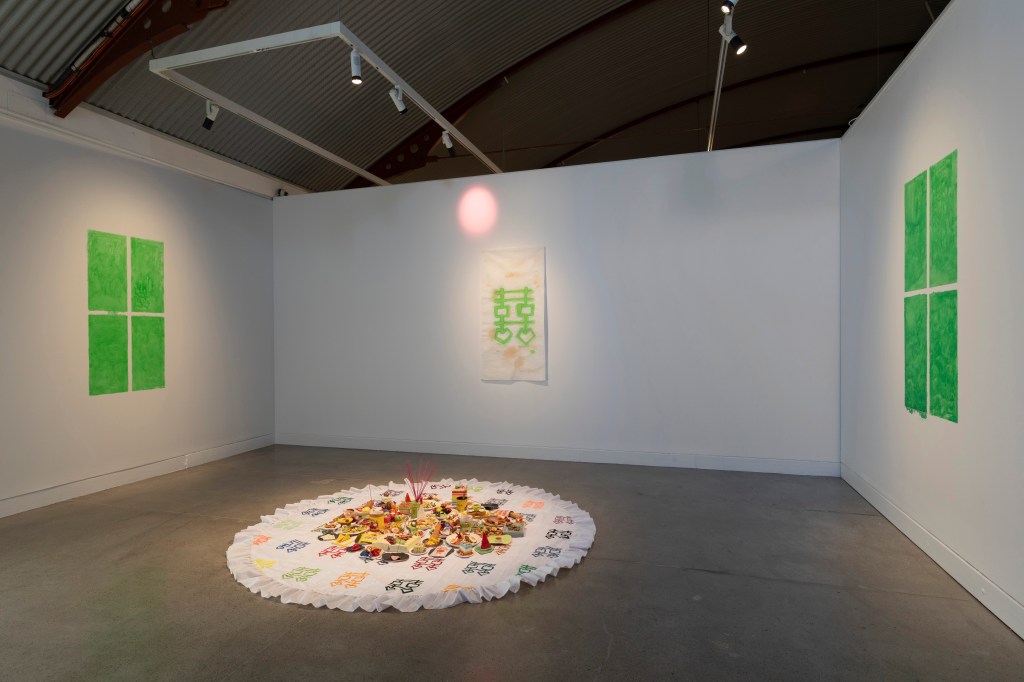
In the centre of the room, on a moon-shaped rug, an offering is laid out in the form of a loving and familiar question: have you eaten? In Tea ceremony in the celestial garden, Jayanto’s ceramic food objects are formally suggestive of reality, but evoke memories and otherworldly experiences. On small white plates, each dish is reminiscent of food offerings left at an altar for a beloved ghost or ancestor—a meal that is not meant for our consumption but is instead an act of generosity and nourishment.
There is a strangeness in the manipulation of the hard yet delicate material of ceramics to depict something as soft and sensory as food. A glossy coat of varnish over brightly coloured blue and green dumplings carries with it an element of absurdity and desire; a colourful spread of siomay bandung (fish dumplings) are placed alongside sugar-dusted almond croissants, and the spongey surface of kue mangkok (steamed cupcakes) explode with small flower-shaped decorations. Bridging Eastern and Western dishes with the traditional and contemporary, Jayanto draws inspiration from his cultural heritage, particularly his mother’s cooking. Growing up in a small village in North Sumatra where being queer was once taboo and being Chinese meant being excluded, Jayanto transforms familiar childhood dishes into speculative objects that are reinscribed with joy and humour. Rather than telling a singular or linear story of migration, Tea ceremony in the
celestial garden celebrates mixed cultures and multiple identities.
This image of duality is reflected in Jayanto’s recurring and varied use of the double happiness symbol (‘囍’) across the installation, composed of two Chinese characters for ‘joy’. Typically used as a symbol to celebrate marriage, it is often found on decorative wedding items, embossed in bright gold foil on auspicious red envelopes. Yet, Jayanto’s use of this recognisable symbol deviates from tradition, transforming its presence into a sacred and ritualistic repetition. Appearing in multiple forms, ‘囍’ is painted as a mural with green pandan leaf extract; tucked away beneath a pile of feathers on a ceramic book object; and hand-embroidered in colourful fabric all over a large white rug, crafted by his sister. In each instance, the double happiness symbol remains the same shape but is remade through different materials and textures, suggesting that cultural identity is a constantly transformative process, much like ceramic objects fired in a kiln. The double happiness symbol might also reflect ideas of imitation and authenticity that prevail in discussions of identity. However, its twin shape of twisting knots and shared lines ultimately speak to a kinship and similarity much like the beauty of same-sex love, harmony, and balance.
Under a pink spotlight that embraces the room with warmth, the fantasy tea garden is both a memorial site and a hopeful envisioning of what the future holds. The only non-food ceramic object in the installation is a ‘yellow’ book facing down with the letters ‘EXILE 囍 OW’ inscribed on the cover, slightly obstructed by vibrant feathers. Carved into the object but not painted over, each letter leaves a ghostly imprint that serves as a reminder of hardship and suffering, referencing the exile of queer Irish writer and playwright Oscar Wilde (OW) in the late 1800s. The rainbow feathers and blue double happiness symbol are the most vivid elements on the object, visually and materially raised while the text sinks in. For many, queer identity is celebratory and layered with many voices in a shared community. Yet, alongside pride in queer identity, the ceramic book reminds us that the ever-present memory of pain and isolation within the LGBTQIA+ community, both on personal and historical levels, cannot be forgotten or overlooked. Inevitably, the ceramic object is fused as one and cannot be separated; the feathers appear light and airy, but they are just as heavy and weighted as the structure beneath it. In this way, there is no singular reading of this work as evoking either happiness or sadness, when the two feelings must coexist.
Tea ceremony in the celestial garden invites viewers to walk around curved paths of the moon rug and view each ceramic object intimately from different angles—gathering together, sharing conversations, and bringing the tea ceremony to life. As a significant project commemorating Jayanto’s 27 years living in Indonesia and 27 years in Australia, this installation marks a blossoming of the artist’s self-expression. It speaks to an unabashed tenderness for the world and its simple pleasures: enjoying a meal on the floor, or cooking a loved one’s favourite dish. Both quiet and loud, it is an ode to all the small rituals that create meditative spaces for sincere contemplation and abundant joy shared with others.
 jayanto damanik tan