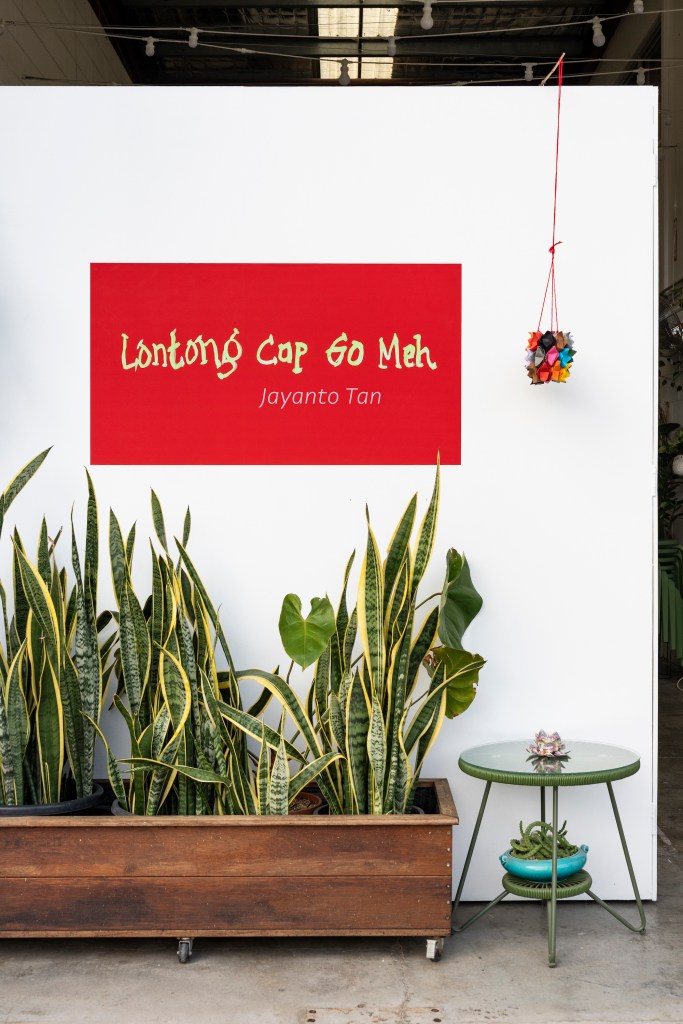
Exhibition and performance, 15 February 2026, Loupe Studio, Meijin Brisbane
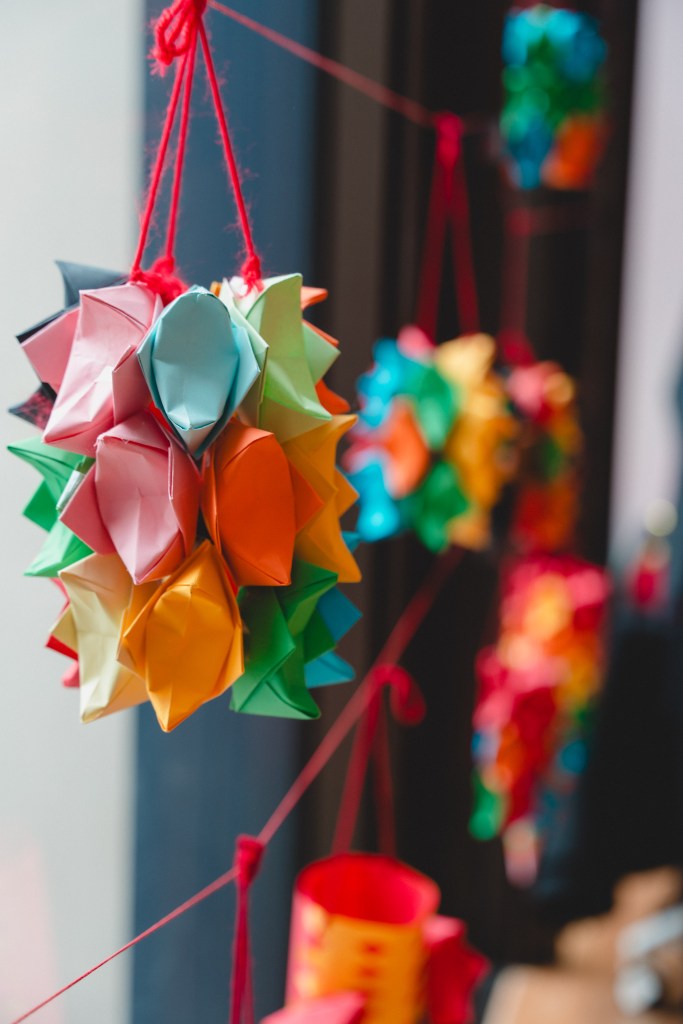
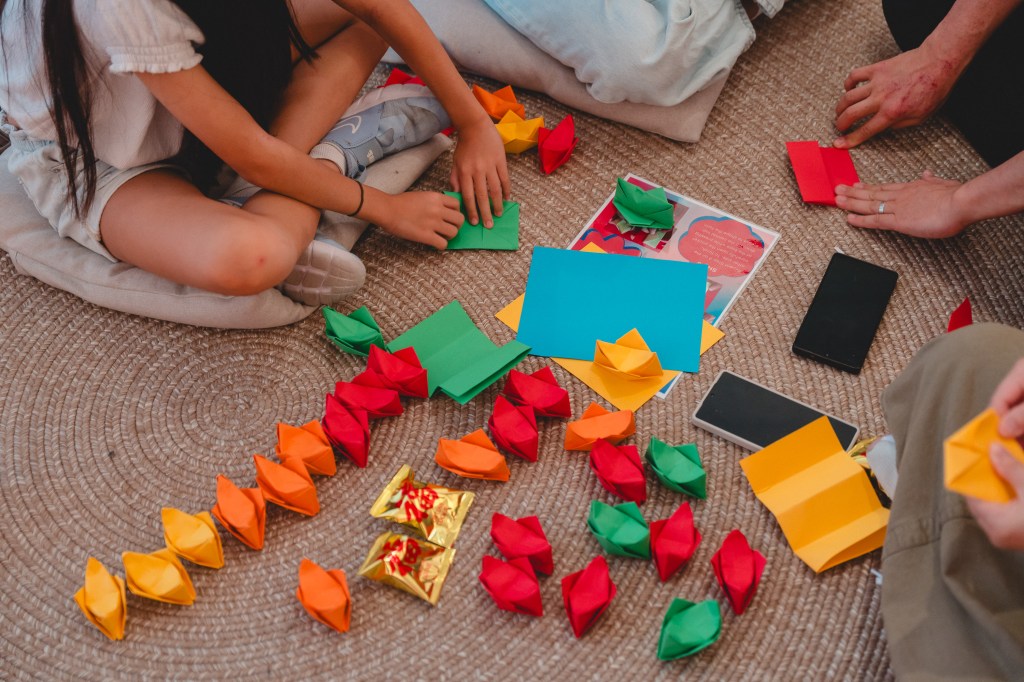
Lantern workshop, 14 February 2026 Museum of Brisbane, 14 February 2026
14th February – 3th March 2026
This exhibition in collaboration with Museum of Brisbane and BrisAsia Festival 2016
Images by Louis Lim/Loupe Studio and Dave Kan/Museum of Brisbane
Text by Elena Dias-Jayasinha, Curator, Museum of Brisbane
From the Sungai Deli to Maiwar
Jayanto Tan is an accomplished artist whose practice spans ceramics, installation, cooking, performance and community workshops. Deeply autobiographical, his work draws on his lived experiences growing up as a Chinese Indonesian in North Sumatra, and his subsequent move to Gadigal and Wangal Country (Sydney). His work touches on themes of loss, displacement, reconciliation and reclamation, but at its core, is about sharing and connecting with others.
Over the past decade, Jayanto has cultivated strong ties with the Meanjin (Brisbane) community, having travelled to and exhibited in the city many times. To accompany the launch of his book, Rainbow Miniature series, he has developed a pop-up exhibition and series of public programs with Loupe Creative Space, in collaboration with Museum of Brisbane and BrisAsia Festival.
When speaking about the exhibition and its overlapping, interconnected elements, Jayanto uses water as an anchor. He explains that water unites us all: it is the planet’s lifeblood, weaving every living thing into an interconnected web. His journey through life, to an extent, can be mapped through waterways, starting with the Sungai Deli (Deli River) near where he was born.
Sungai Deli (Deli River)
The Sungai Deli is a significant waterway in North Sumatra, flowing through Medan into the Malacca Strait. Jayanto was born west of the river in a remote village called Bandar Tinggi, the youngest of 13 children to parents of Chinese descent. His mother, Naomi Waginem/Lim A Poe, was a fourth-generation Peranakan Chinese with ancestral ties to the Fujian province, as well as Malay and Batak heritage. His father, Tan Liu Min, on the other hand, was a recent migrant from the Guangdong province. At home the family spoke a mix of Hokkien, Indonesian and Malay.
Jayanto grew up during the Suharto regime, when existing prejudices against ethnic Chinese people were heightened and, in many instances, embedded in policy. Like so many others, he was taught to suppress his Chinese heritage and, if he were to practise his culture, to do so in secret.
In primary school, he remembers experiencing overt forms of discrimination. To enrol, he was forced to change his birthname, Tan Seng Lie, to something ‘more Indonesian’. A teacher suggested Yanto, which became his name for years to come. He also recalls having derogatory terms yelled at him and being excluded from various activities, like hoisting the national flag.
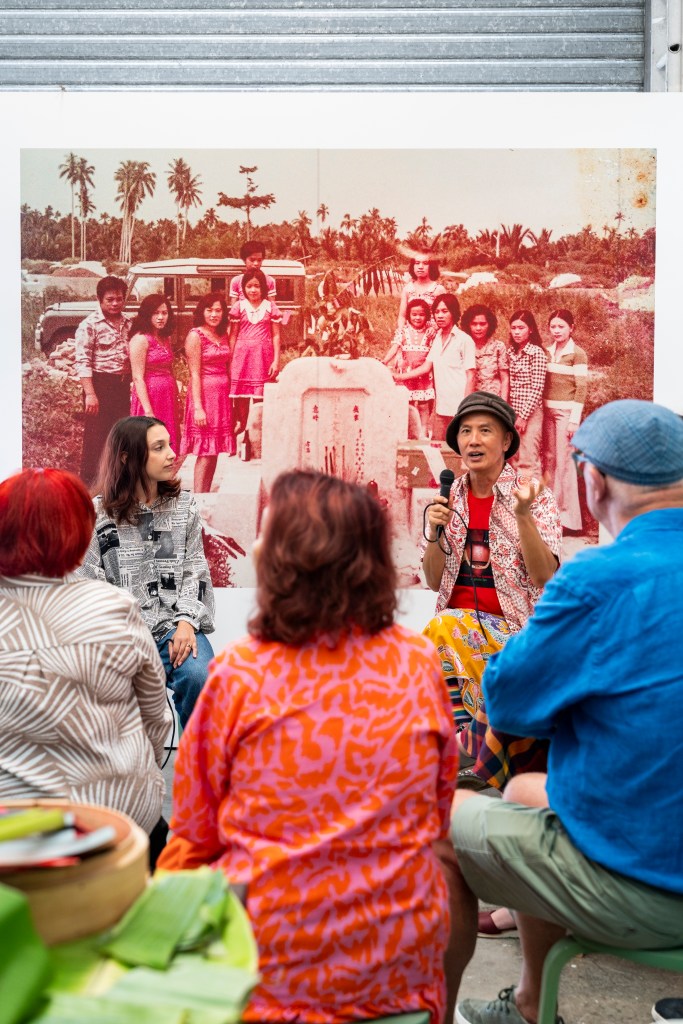
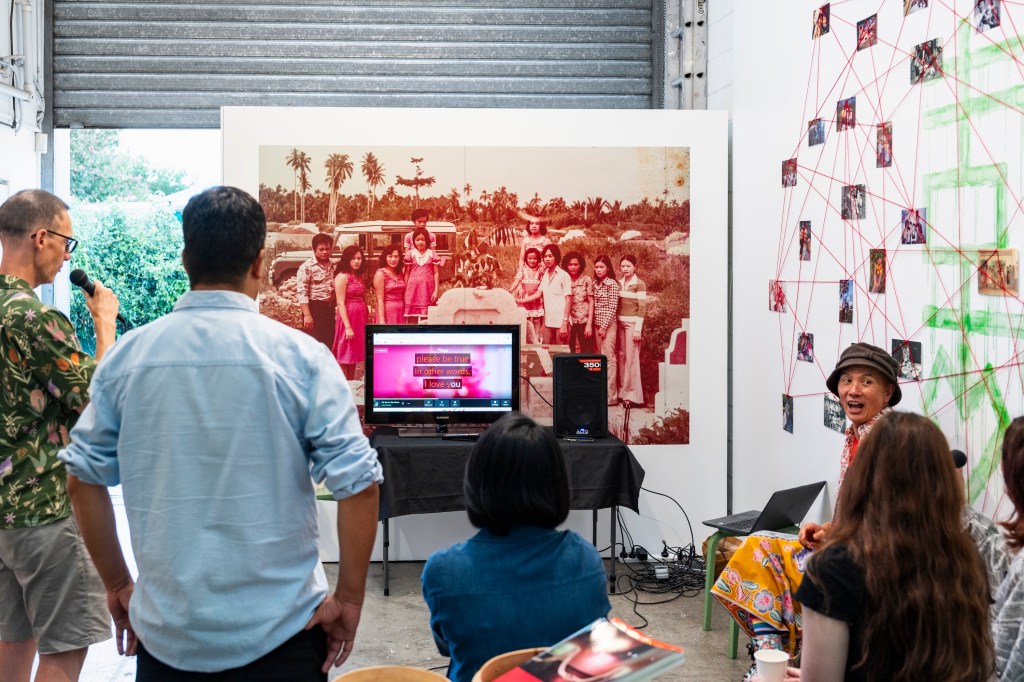
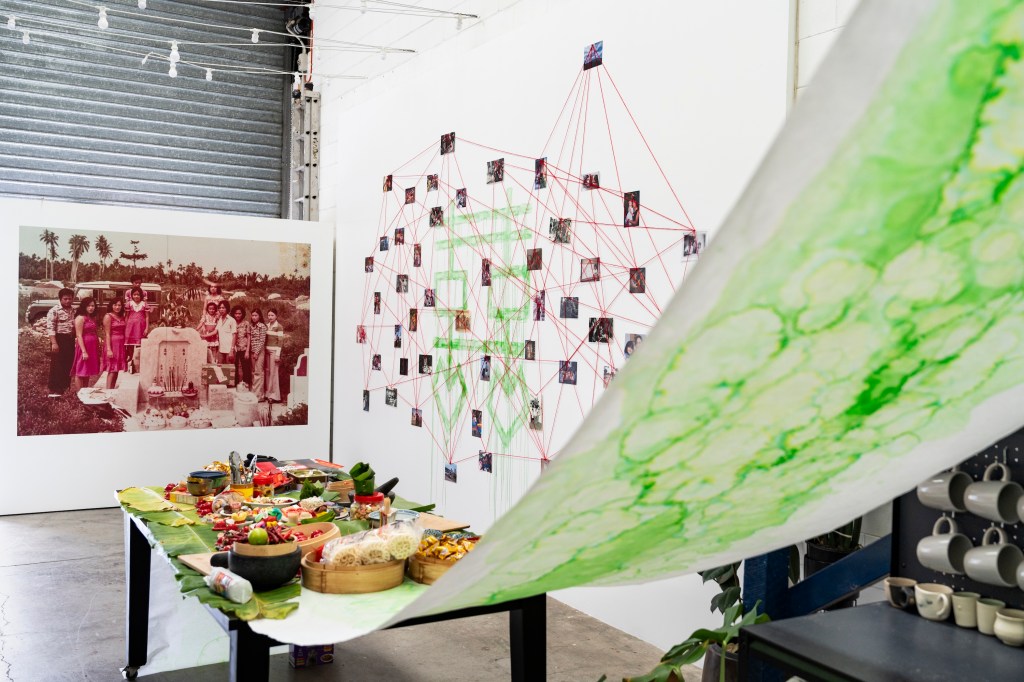
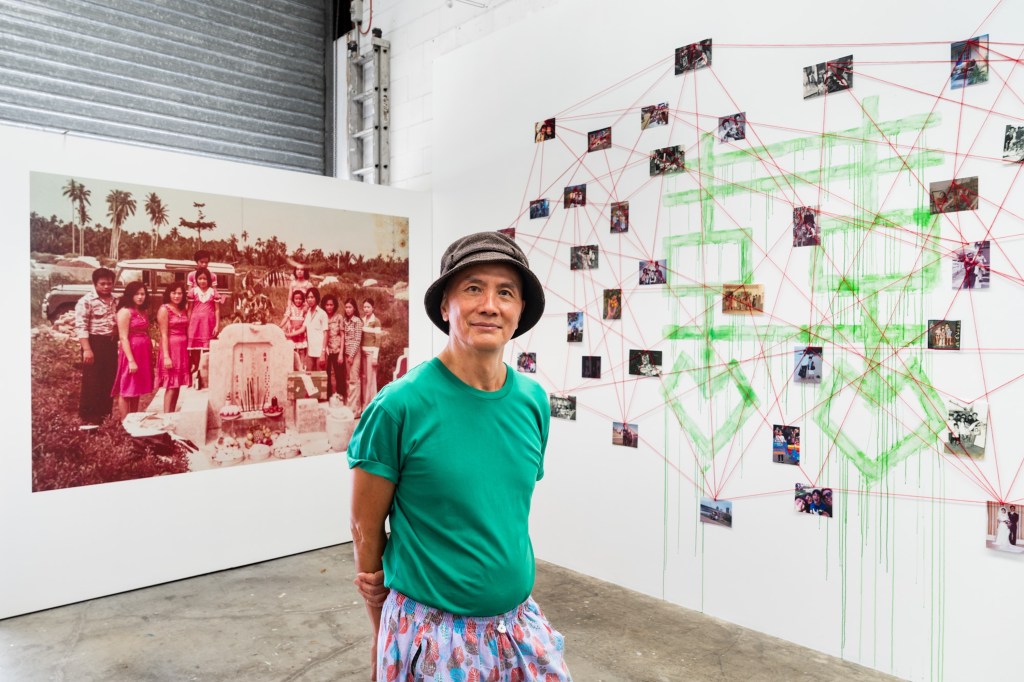
Although public displays of Chinese culture were banned under Suharto, Jayanto and his family continued to celebrate Chinese festivals behind closed doors. One of the photos on display shows his family observing Ceng Beng (Tomb-Sweeping Day) at his father’s grave. Celebrated on the 15th day after the March equinox, Ceng Beng is a day to remember one’s ancestors by cleaning their graves and offering food and prayers. After discovering this photo at one of his sisters’ homes in Lubuk Pakam, Jayanto became compelled to recover the parts of his life he had been forced to hide. His resolve only strengthened after learning his father’s grave had been destroyed, most likely for real estate. Experiencing this intentional erasure, he became even more motivated to share his family’s story – a narrative that poignantly corresponds with those of many Chinese Indonesian families.
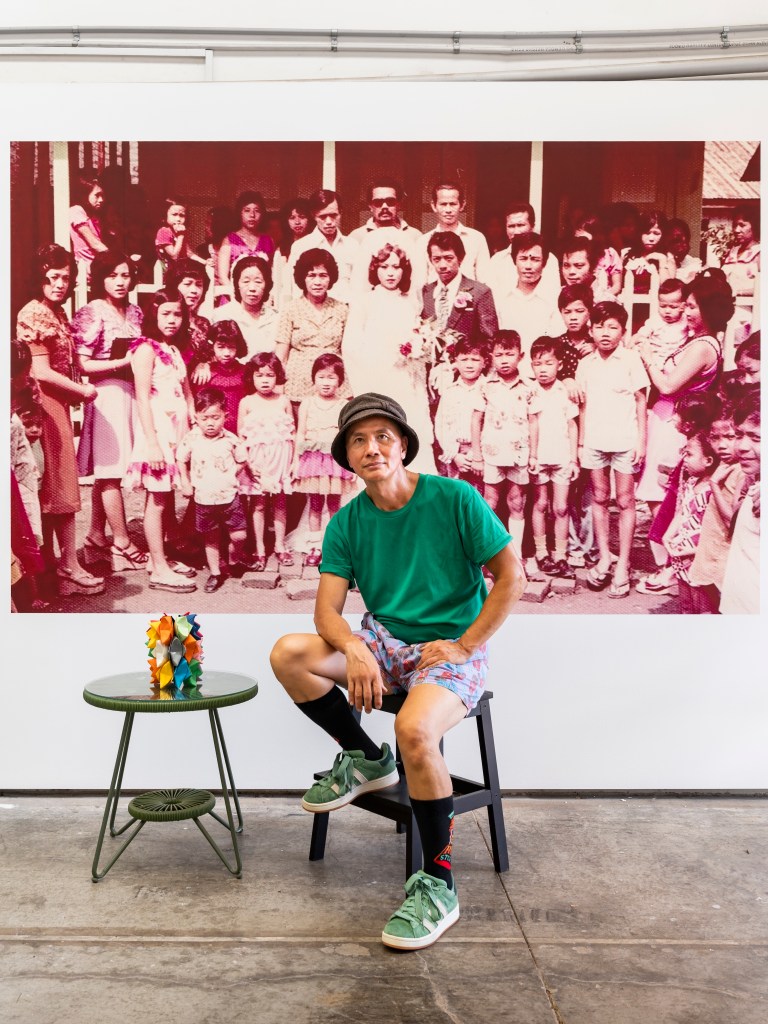
Jayanto chose to display this photo to ground the exhibition in his family history. Next to it, he has included a photo of his third oldest sister’s wedding. His relatives gather outside his brother-in-law’s house in Tebing Tinggi, a village near his hometown. As far as Jayanto knows, the photo is the closest to capturing his entire family. Although everyone is of Chinese heritage, he explains, “They’re not wearing traditional Chinese outfits, they’re modern Indonesians who didn’t see themselves as Chinese”. By including the photo, Jayanto wanted to debunk the stereotypes forced onto Chinese Indonesians, as well as emphasise the facade they had to put on, during Suharto’s reign.
Reflecting on his childhood, Jayanto says he was not very optimistic about his future. He felt trapped, unable to define his own life. In his late 20s, however, things started to change.
Goolay’yari (Cooks River)
When he was 17, Jayanto’s mother moved the family to Jakarta to pursue a better living. After graduating high school, Jayanto studied accounting, and for a while, travelled between Yogyakarta and Bali. In late 1997, he made the decision to move to so-called Australia in pursuit of freedom.
Soon after he left, fuelled by economic crisis, Indonesia erupted in civil unrest. The Chinese population, an easy scapegoat for the country’s woes, was especially targeted during what is colloquially known as Tragedi 1998. To this day, Jayanto’s family does not talk about what happened during the riots. Tensions lessened after the downfall of the Suharto regime, but by that time, Jayanto was already settled in Western Sydney, near the Goolay’yari (Cooks River).
Jayanto’s first decade in so-called Australia was challenging. He still felt like he had to hide himself, especially with the rise of politicians like Pauline Hanson inciting racism. At one point, he was told his name was too challenging for Australians to learn, so he added ‘Jay’ in front of ‘Yanto’ and ‘Tan’ as his surname.
In 2008, after struggling for a decade, Jayanto felt a glimmer of hope watching the National Apology. Even though the country had a long way to go (and still does), he felt like it was a step in the right direction and, for the first time, wanted to be part of the Australian community.
Slowly, Jayanto started to feel more comfortable expressing himself. While working at one of the cafes at the Art Gallery of New South Wales, he thought to try his hand at visual art. Encouraged by friends, including Robert Herbert, he enrolled in a Diploma of Fine Arts at the Sydney Gallery School, TAFE NSW, then went on to complete his bachelor’s and master’s degrees at the National Art School.
As his practice developed, Jayanto was continually drawn to food and the ritual of sharing food. He saw it as a means of honouring and reconciling with his past, as well as bringing people from all walks of life together to foster new connections and collectively heal.
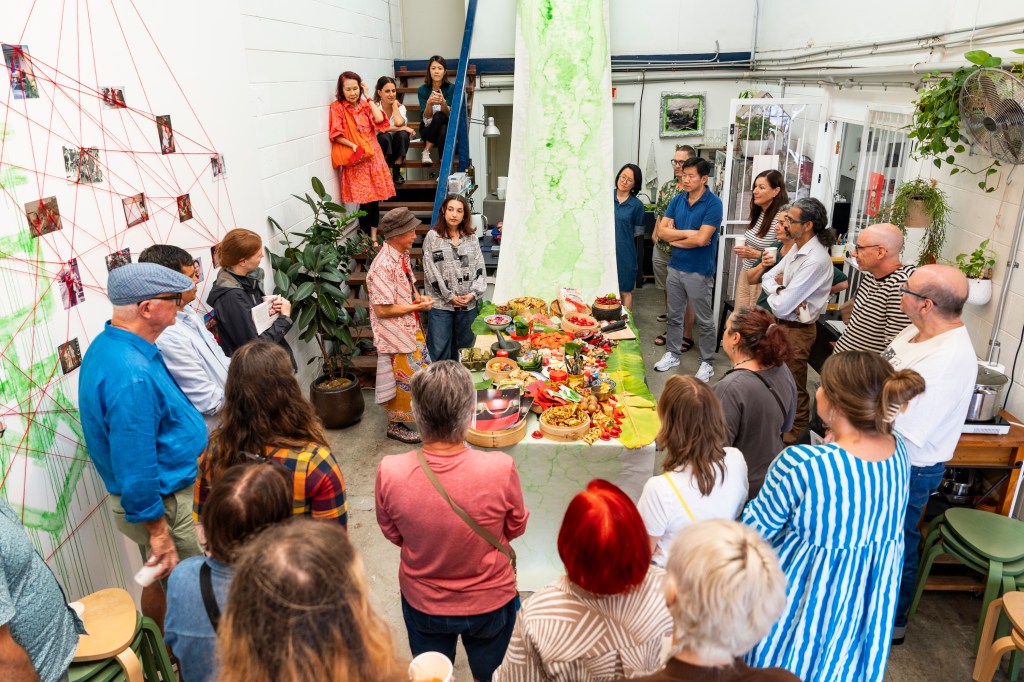
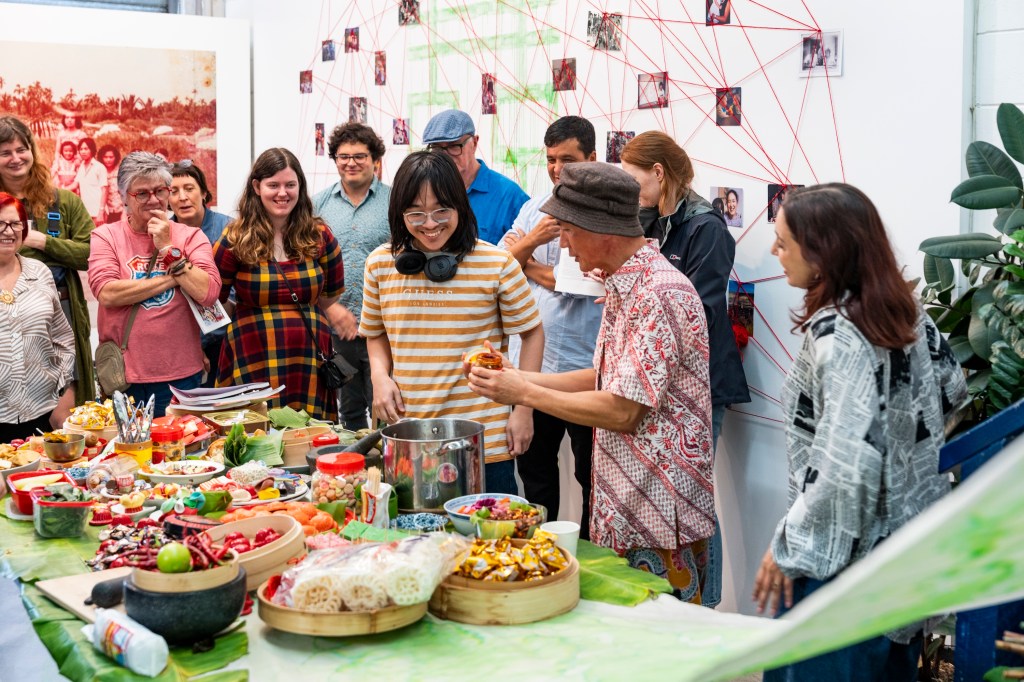
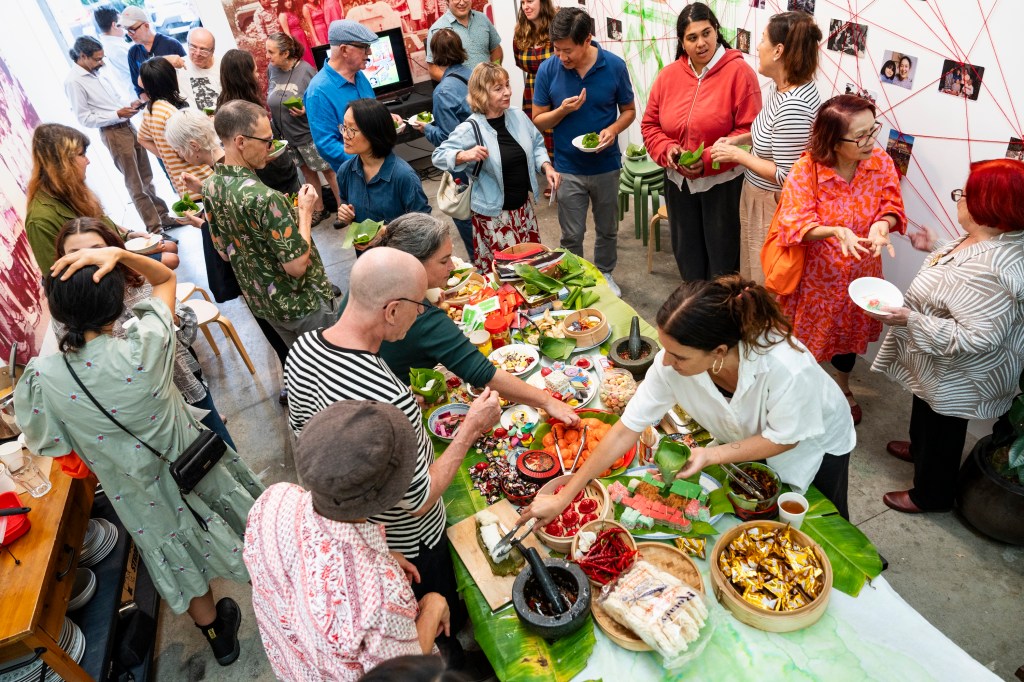
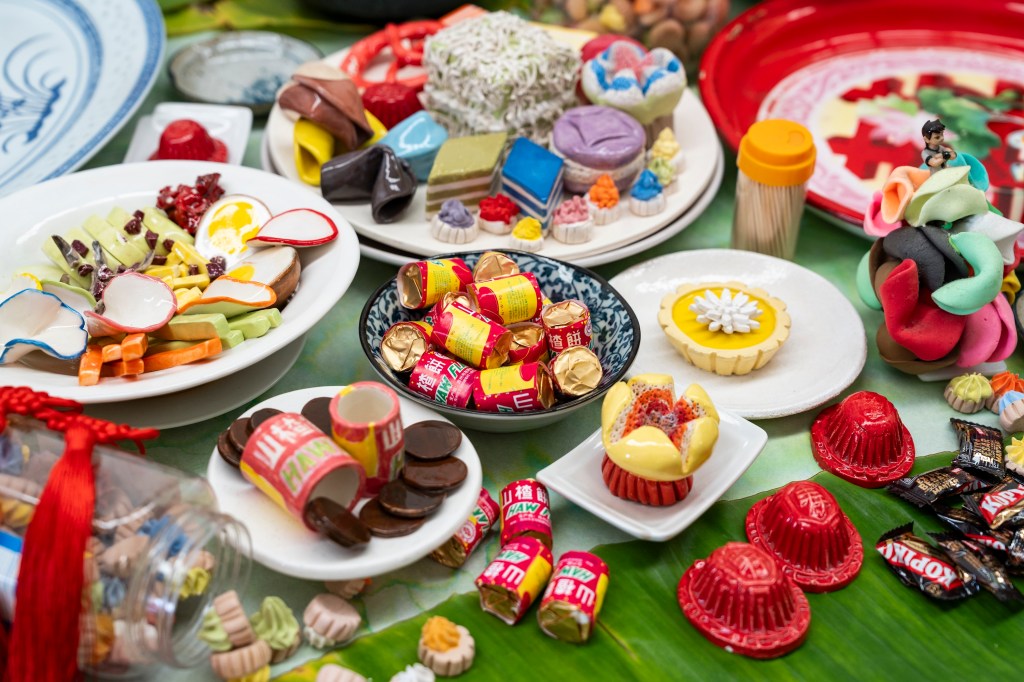
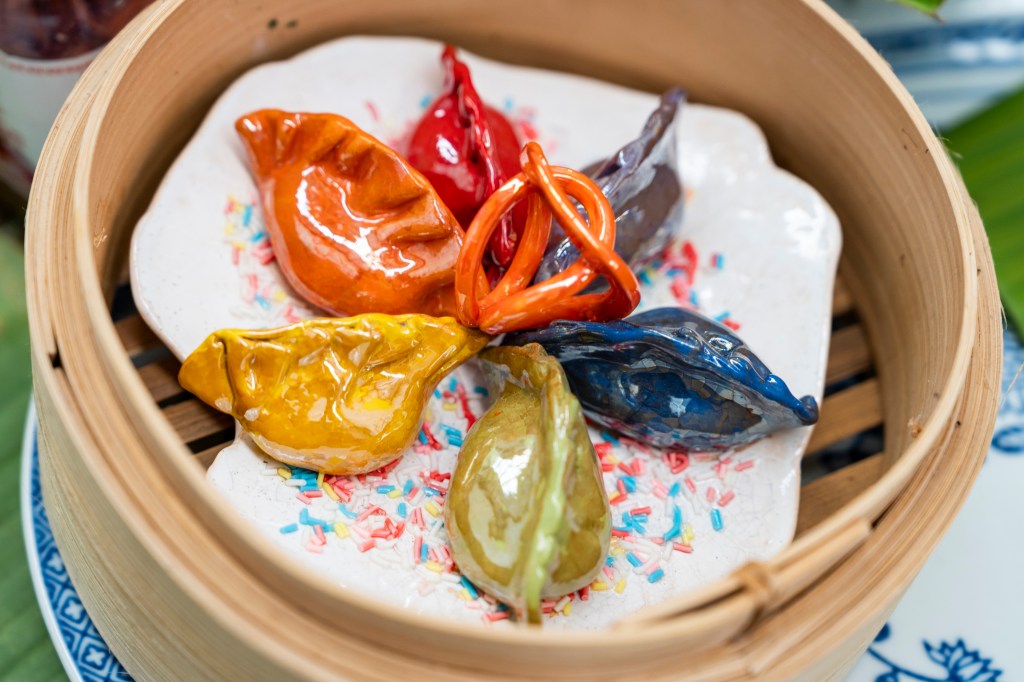
A selection of his early work is included in the exhibition, on the table in a sumptuous display. Some morsels are fashioned in clay, while others are available to eat. Surrounding the feast are rice paper scrolls painted with pandan, a herb that reminds Jayanto of his childhood. In his family’s back garden, pandan grew wildly behind the chicken and duck coop. He was often tasked with harvesting the plant for his mother for cooking.
Here, Jayanto has used pandan to paint the Chinese symbol ‘囍’, meaning ‘double happiness’. This symbol, often printed at weddings to wish the couple luck, has been adapted by Jayanto to encompass relationships of all kinds. After moving to so-called Australia, not only did Jayanto feel like he could finally explore his Chinese heritage, but he also felt safe to express his queer identity.
Living on Gadigal and Wangal Country and becoming an artist has allowed Jayanto to live his dream of being himself. His journey is far from over though – in fact, it’s only beginning.
Maiwar (Brisbane River)
Sharing is key to Jayanto’s practice, and when the opportunity to connect more deeply with the Meanjin community came up, he seized it.
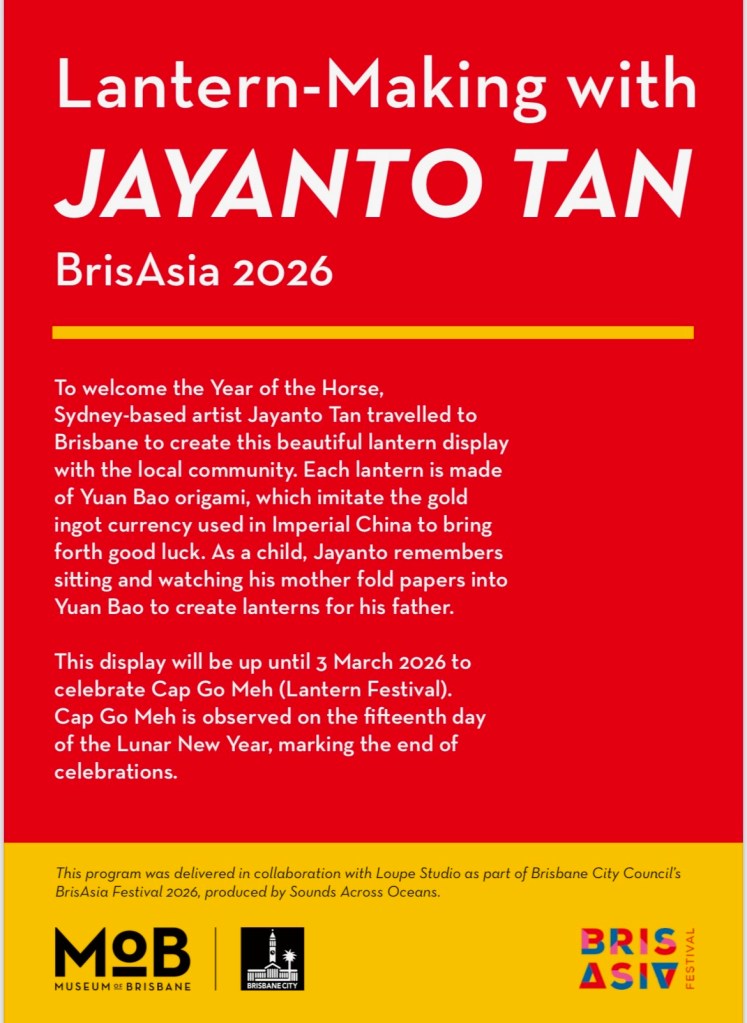
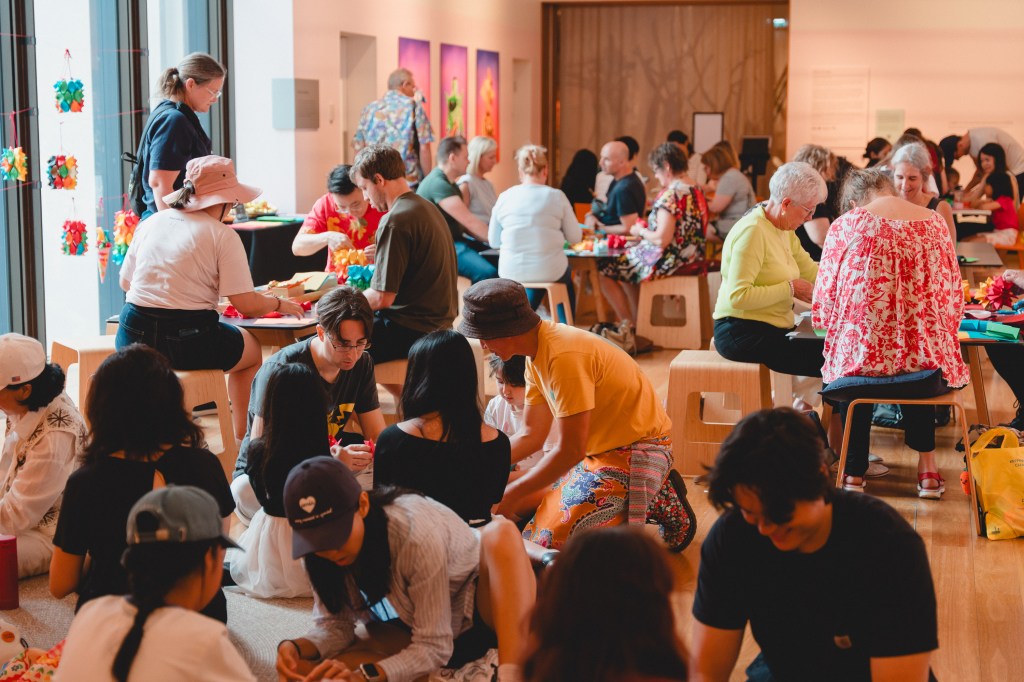
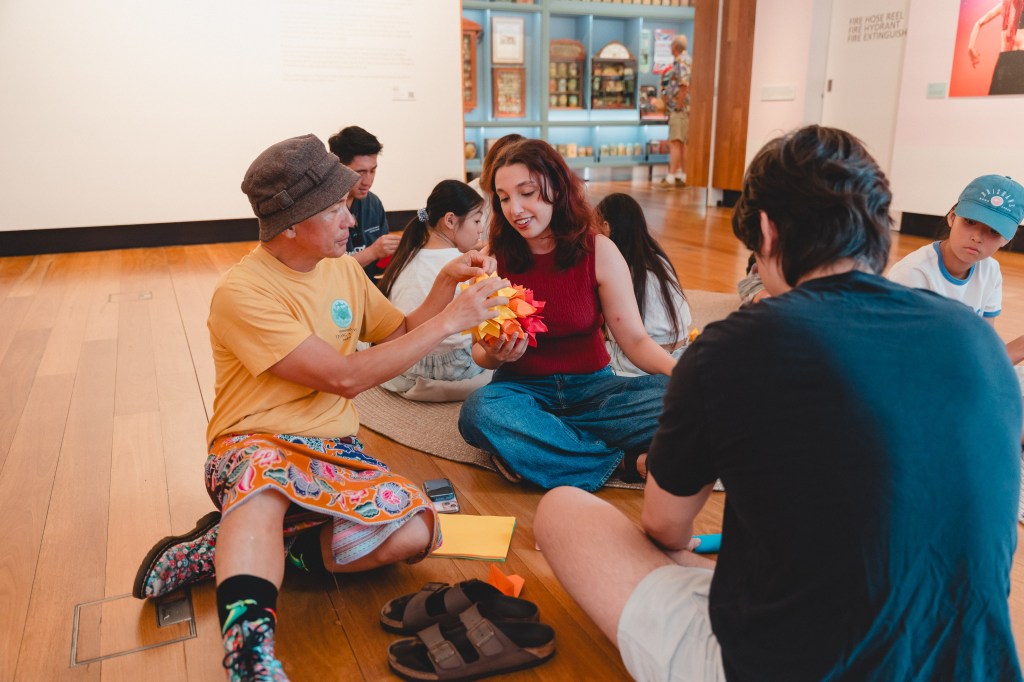
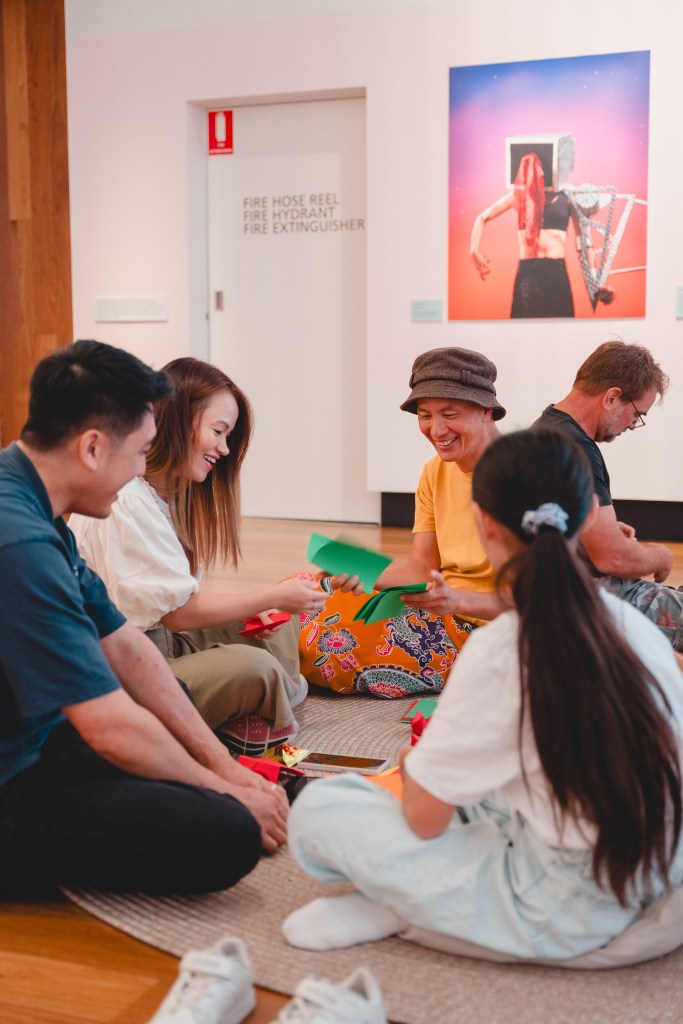
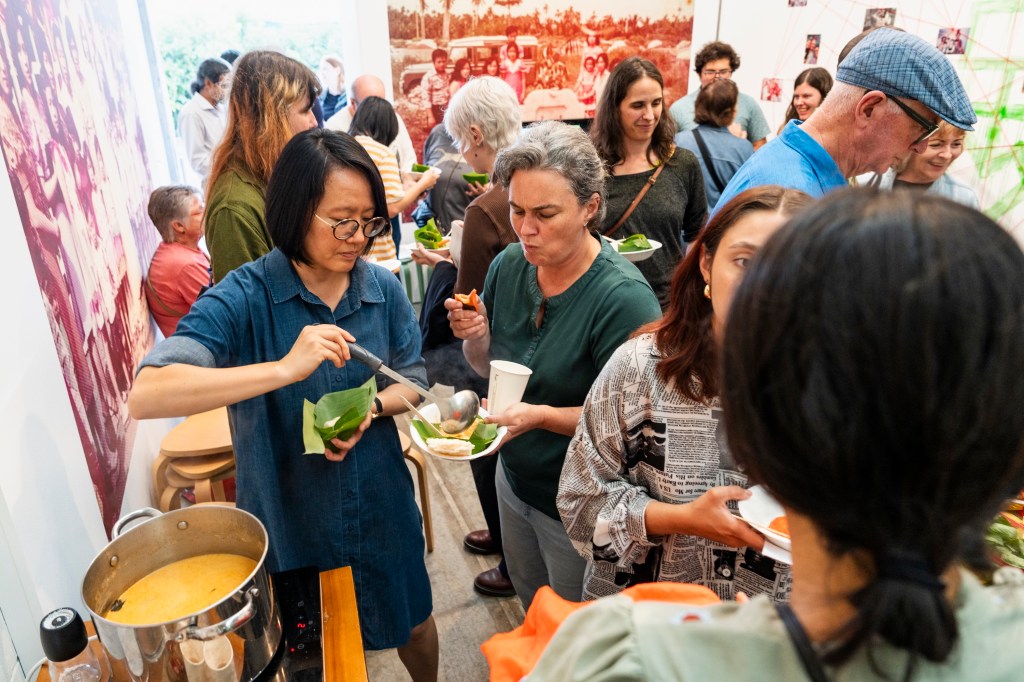
Beyond the exhibition, he has curated a series of events for audiences to take part in to celebrate Cap Go Meh (Lantern Festival), the last day of the Lunar New Year. These include a lantern-making workshop; an artist talk and Q&A session; a live cooking performance where he will make lontong cap go meh (rice cakes) and curry, drawing on his mother’s Peranakan Chinese heritage; and open karaoke.
He has also developed a community mural to show that, no matter our differences, we are all connected. Participants are invited to take al photo with an object or memory that holds meaning to them, pin it to the wall, then connect it to other stories with red thread.
The highlight of Jayanto’s visit, however, is the unveiling of Rainbow Miniature series. This book offers an in-depth exploration into his family background, including a biography of his mother and key essays about his practice.He explains, “The story of Chinese Indonesians is like Chinese ghost whispers. I wanted to make a book to record these stories and to help build understanding in so-called Australia and ensure this kind of discrimination doesn’t happen again”.
After his trip to Meanjin, Jayanto plans to launch his book elsewhere in the country. He hopes his stories continue to ripple outward, flowing into other people’s lives.
https://showcasemyart.com/jayanto-tan-memory-ritual-and-the-art-of-belonging/
https://garlandmag.com/jayanto-tan-brings-chinese-indonesian-stories-to-brisbane-and-beyond/
https://www.instagram.com/abcasia/reel/DU65dIOiGfk/?hl=ru
https://www.museumofbrisbane.com.au/whats-on/jayanto-tan-workshop

